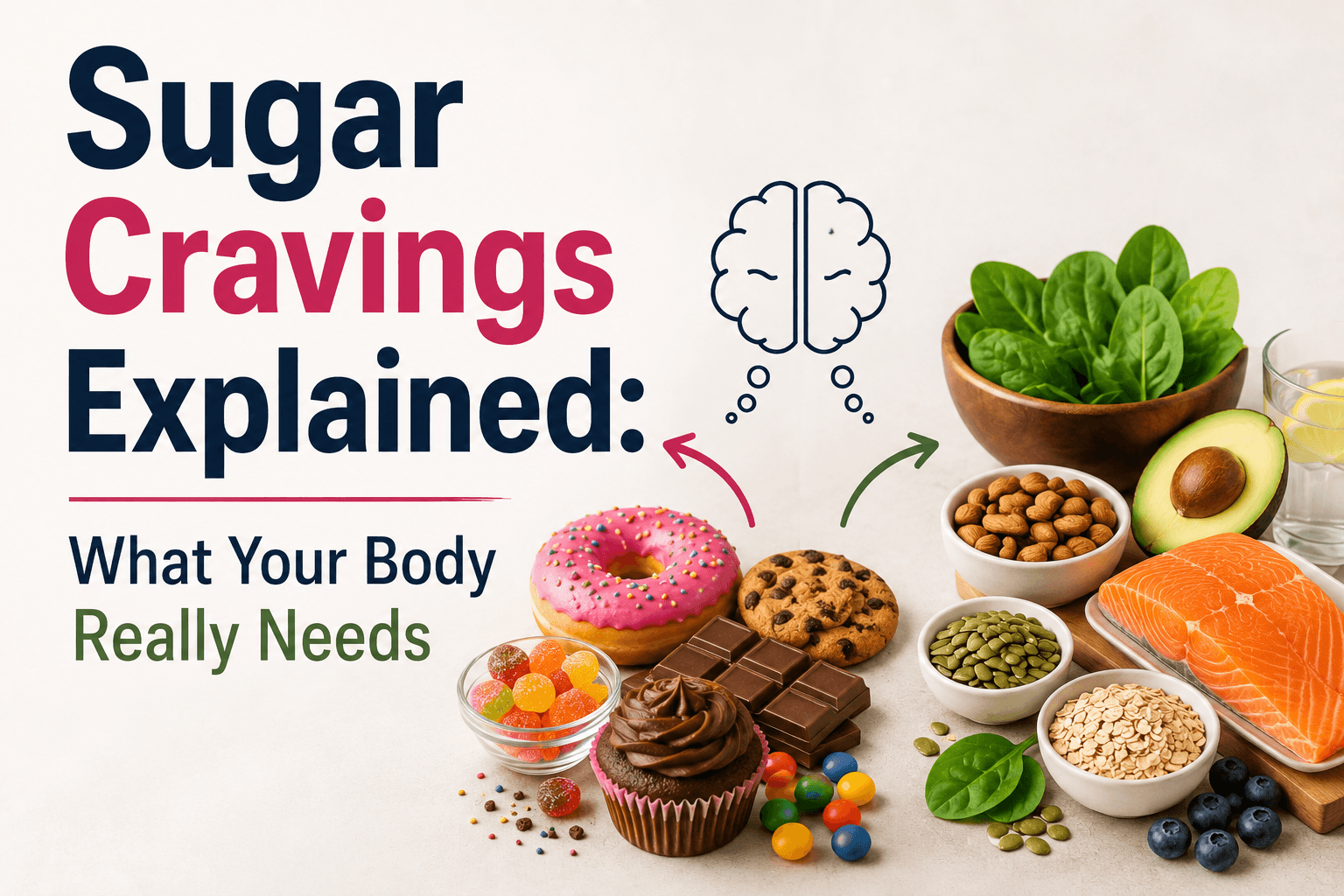
Sugar Cravings Explained: What Your Body Really Needs
That afternoon urge for something sweet isn’t a lack of discipline — it’s biology. From dopamine spikes to blood sugar crashes to stress and poor sleep, your body has real, science-backed reasons for craving sugar. In this article, we break down exactly what’s driving your cravings and share practical ways to work with your body instead of fighting it.
That 4 p.m. pull toward chocolate. The “just one bite” that turns into the whole bar. If you’ve ever wondered why sugar cravings feel almost impossible to ignore, the answer isn’t a lack of willpower — it’s biology. Science shows sugar cravings are the result of a very real chain reaction involving your brain, your blood sugar, your hormones, and your stress levels. Understanding that chain is the first step to breaking it.
-
Your Brain Is Wired to Want It:
Sugar doesn’t just taste good — it activates the same reward circuitry in your brain that’s involved in motivation and pleasure. The moment something sweet touches your tongue, your brain releases dopamine, the neurotransmitter responsible for that quick hit of satisfaction. Research from the Max Planck Institute found this reward signal fires almost instantly, before the sugar has even reached your stomach — meaning your brain starts craving the next hit before your body has processed the last one.
Here’s the catch: the more often you eat sugar, the more your brain adapts to it. Studies published in Brain and Behavior show that repeated sugar intake actually changes dopamine signaling in a brain region called the nucleus accumbens, gradually requiring more sugar to produce the same feeling of satisfaction. Over time, this can reduce the number of dopamine receptors available, a pattern also seen in other forms of reward-seeking behavior — which is part of why sugar has been described by some researchers as having addiction-like properties.
The Blood Sugar Rollercoaster
One of the most common — and most fixable — causes of sugar cravings has nothing to do with willpower at all. It’s called reactive hypoglycemia, and it works like this: you eat something high in sugar or refined carbohydrates, your blood sugar spikes quickly, and your body releases insulin to bring it back down. Often, insulin overcorrects, dropping your blood sugar below where it started.
That dip triggers a cascade of stress hormones and appetite signals, leaving you shaky, foggy, irritable, and urgently craving something sweet — your body’s fastest route back to stable energy. Research published in the Journal of Eating Disorders found that these blood sugar swings activate the same brain regions involved in addiction, meaning a crash doesn’t just make you hungry — it makes you crave the very thing that caused the crash. This is why sugar cravings often strike at very predictable times: mid-morning, mid-afternoon, or a couple of hours after a sugary meal.
Stress and Sleep Make It Worse
Chronic stress raises cortisol, a hormone that influences appetite and specifically increases cravings for high-sugar, high-fat foods — your body’s ancient survival response to perceived danger, mistakenly triggered by a stressful workday or bad night’s sleep. Poor sleep compounds this further by disrupting ghrelin (your hunger hormone) and leptin (your fullness hormone), making sugary, energy-dense foods harder to resist the next day.
What Your Body Might Actually Need
Sugar cravings are rarely about sugar itself — they’re often a signal. Recognizing what’s underneath the craving can help you respond to it more effectively:
-A craving 2–3 hours after eating often signals a blood sugar crash — the fix is stabilizing your next meal, not skipping it.
-A craving during a stressful moment often reflects cortisol seeking quick comfort, not true hunger.
-A craving in the late evening is frequently linked to poor sleep the night before or under-eating earlier in the day.
-A craving that hits like clockwork daily may reflect a learned dopamine pattern your brain has come to expect.
dd0c893f-d425-4c53-b177-f7dce99ed70f