Peptides Explained: The Wellness Trend, Fact vs. Hype
Peptides have become one of the biggest wellness trends, fueled by the success of GLP-1 medications like Ozempic. But peptides aren’t one category — they range from well-researched treatments (GLP-1s, insulin) to trending recovery compounds like BPC-157 and beauty peptides like copper peptides, many of which still lack strong human safety data or regulatory approval. This article breaks down the different types of peptides, explains why the trend exploded, and highlights why sourcing and medical supervision matter before trying any of them — encouraging readers to stay curious but cautious.
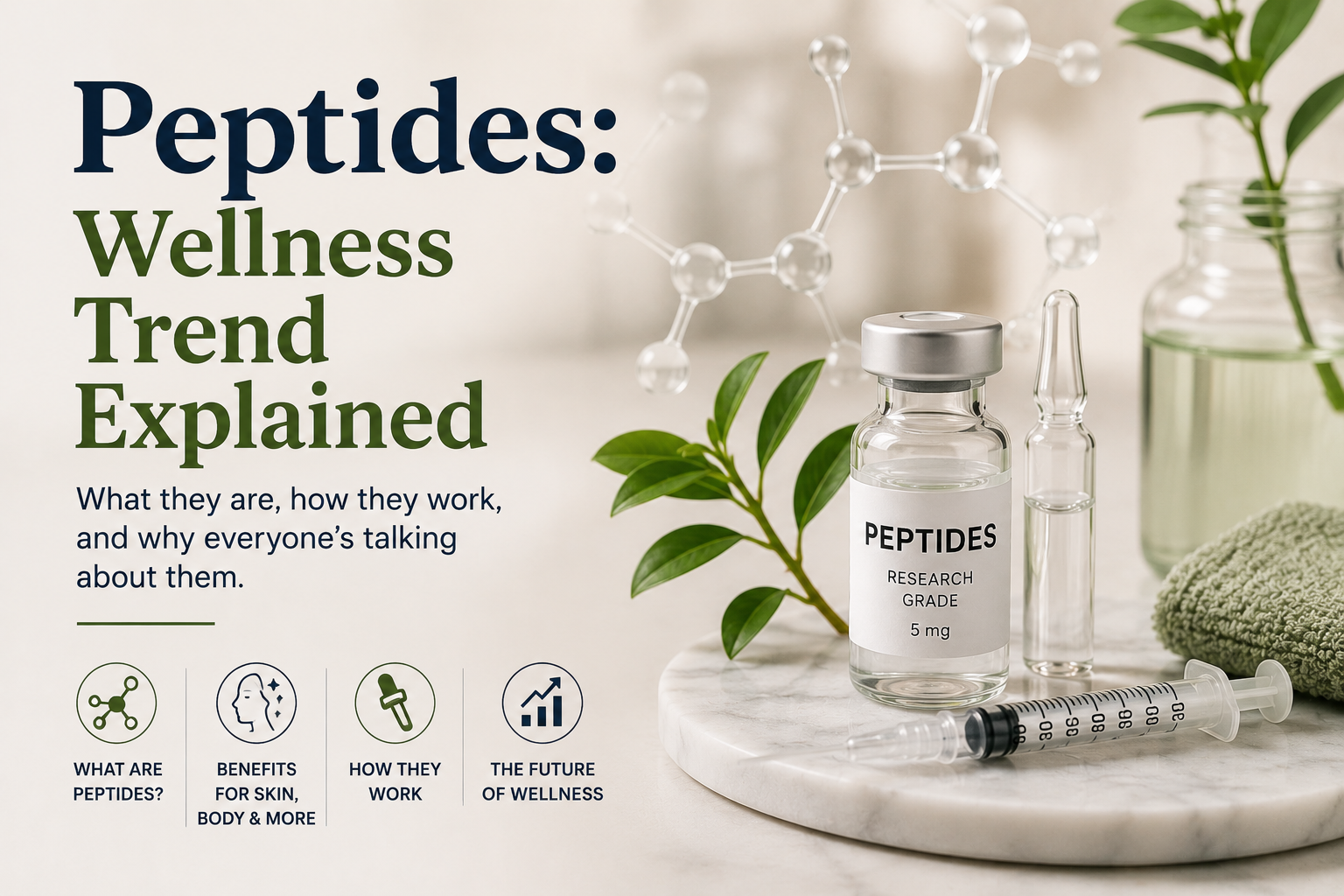
If you’ve scrolled through wellness content lately, you’ve probably seen it: peptides. From skin-boosting serums to injectable “recovery stacks” praised by athletes and biohackers, peptides have gone from a niche biohacker topic to one of the biggest wellness conversations of the year. But between the hype and the headlines, what are peptides actually doing — and is the excitement backed by science?
What Are Peptides, Really?
Peptides are short chains of amino acids — essentially small fragments of protein — that act as signaling molecules in the body, telling cells what to do. This isn’t new science. Some of the most important medications in modern medicine are peptides, including insulin and GLP-1 medications like semaglutide, which are backed by decades of rigorous clinical research and regulatory approval.
What is new is the explosion of interest in a much wider category of peptides being marketed for recovery, anti-aging, and performance — often outside of medical supervision.
Why Peptides Are Suddenly Everywhere
The peptide boom didn’t happen in isolation — it’s largely a ripple effect of GLP-1 medications. Once people saw how powerfully a peptide-based drug could affect weight and metabolism, interest naturally extended to other peptides, with many wondering whether similar compounds could support recovery, longevity, or performance too.
That curiosity has fueled a wave of new peptide-focused wellness clinics and products, alongside heavy promotion on social media by athletes, influencers, and longevity-focused communities. Search interest in some of these compounds has grown dramatically over the past few years, and it’s now common for wellness providers to offer entire peptide “stacks” targeting everything from joint pain to skin elasticity to cognitive focus.
The Main Categories You’ll Hear About
Peptide therapy isn’t one single thing — it spans several very different categories:
• Metabolic peptides: GLP-1 and GLP-1/GIP therapies (like semaglutide and tirzepatide), used for appetite regulation and metabolic health. This category has the strongest clinical evidence and regulatory approval.
• Recovery and tissue-support peptides: Compounds like BPC-157 and TB-500, widely discussed for tendon, ligament, and muscle recovery — though primarily studied in animal models, with limited large-scale human trials.
• Skin and beauty peptides: Copper peptides (GHK-Cu) and collagen peptides, used topically or orally to support skin elasticity and collagen production.
• Cognitive and longevity peptides: Compounds like Selank, Semax, and epitalon, promoted for focus, mood, or anti-aging effects, generally with the least amount of robust human evidence.
The Evidence Gap — Why Caution Matters:
Here’s the important nuance often missing from social media: not all peptides are created equal, and headlines about one type shouldn’t be applied to all of them. GLP-1 medications have gone through the full clinical trial and regulatory approval process. Many of the recovery and anti-aging peptides currently trending have not — they’re often sold as “research compounds,” which means they haven’t been tested for standardized dosing, purity, or long-term human safety.
Health experts have raised specific concerns about the unregulated peptide market: inconsistent product quality, unclear sourcing, and a lack of medical oversight. In this space, the common pattern is that popularity precedes proof — the promise circulates on social media well before the clinical evidence catches up. This doesn’t mean these peptides are inherently harmful, but it does mean the excitement is currently ahead of the science.
What This Means for You
Peptides are a genuinely exciting area of medical research, and some — like GLP-1 therapies — represent real, evidence-based breakthroughs. But the wellness-trend version of peptides, particularly injectable compounds sourced outside medical supervision, carries real uncertainty.
Key takeaways to remember:
1. Not all peptides are equal — a headline about one type doesn’t apply to the whole category.
2. Evidence level varies widely — GLP-1 peptides have strong clinical backing; many recovery and anti-aging peptides do not yet.
3. Sourcing matters enormously — unregulated, overseas-sourced peptides carry real risks around purity, dosing, and safety.
4. Medical supervision isn’t optional — any interest in peptide therapy should start with a licensed healthcare provider, not a social media trend or online seller.
5. Curiosity is healthy, but pace matters — it’s reasonable to be interested in emerging research while still waiting for the evidence to mature before trying something yourself.
The bottom line:
Peptides are worth paying attention to, but worth approaching the way you would any promising, still-developing area of medicine — with genuine curiosity and healthy caution in equal measure.
This article is for educational purposes and is not a substitute for professional medical advice. Peptide therapies, especially injectable and unregulated compounds, should only be considered under the guidance of a licensed healthcare provider